 0 800 505 207
 info
info

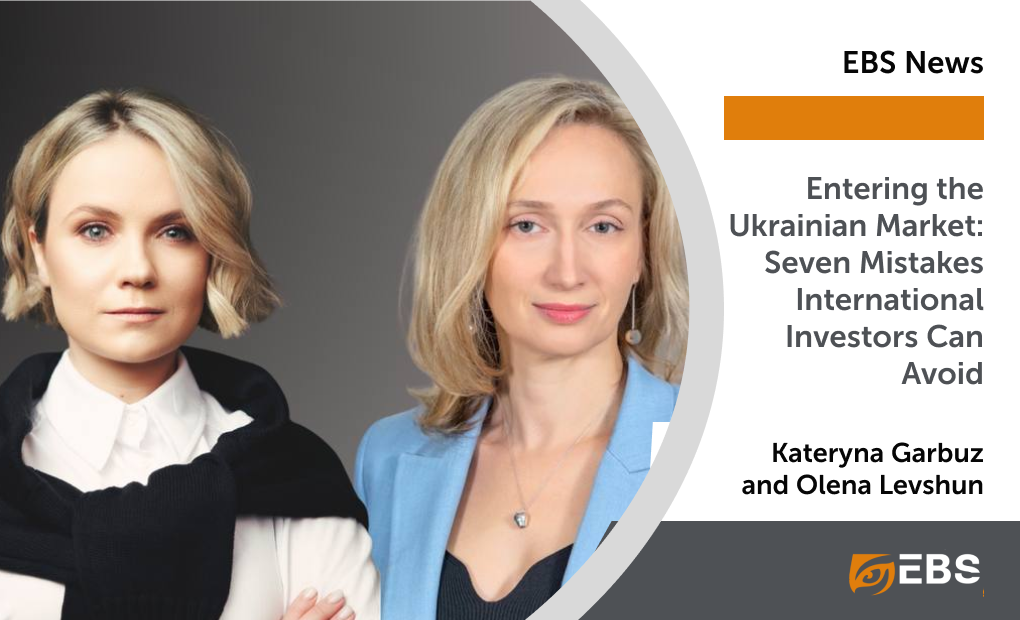
Entering the Ukrainian Market: Seven Mistakes International Investors Can Avoid
Kateryna Garbuz, Partner, Legal Practice Leader and Olena Levshun, Senior Partner, Financial Management and Accounting Outsourcing Practice Leader
For many investors, Ukraine today represents a high-risk, high-potential market. The companies entering early understand both sides of this equation: the complexity of operating in a changing regulatory and institutional environment, and the long-term opportunity of positioning early in a rebuilding economy.
Before the war, hundreds of international companies entered the Ukrainian market every year. Over more than 27 years of advising foreign businesses, EBS has observed a consistent set of challenges that tend to arise during market entry.
Below are several common mistakes international companies make when establishing operations in Ukraine — and that can be avoided with proper preparation.
1. Underestimating the timeline for company registration
Ukrainian legislation allows a legal entity to be registered within 24 hours. In practice, preparing a complete and compliant set of documents often takes considerably longer.
International companies typically need to prepare apostilled documents, which have limited validity periods. If document preparation is not carefully synchronized, some may expire before submission.
Another frequent complexity is the disclosure of ultimate beneficial owners (UBOs) who directly or indirectly hold 25% or more of the company.
2. Assuming registration enables immediate operations
Registering a company is only the first step. In practice, companies cannot begin operating until a local bank account is opened.
Opening a corporate account in Ukraine typically takes two to twelve weeks, depending on the structure of the shareholder group and compliance checks. Without an account, the company cannot contribute charter capital, pay employees, or process operational expenses.
In addition, Ukrainian regulations generally do not allow a parent company to settle invoices on behalf of its local subsidiary.
3. Not reflecting ownership changes in Ukrainian registries
Ukrainian corporate registries must accurately reflect the ownership structure of the company and its parent entities.
If ownership changes occur at the parent company level but are not promptly updated in Ukrainian registries, banks may temporarily block or suspend the company’s accounts until the records are corrected. In practice, this can interrupt ongoing business operations.
4. Selecting an unsuitable financing structure
The financing structure of a Ukrainian subsidiary should reflect both the company’s business model and expected profitability.
In some cases, subsidiaries financed primarily through intra-group loans later generated insufficient profit to service the debt. This can create tax and financial reporting complications, including the inability to deduct interest at the group level.
Over time, accumulated intra-group debt may require restructuring within Ukrainian financial statements.
5. Signing foreign trade contracts without local review
Cross-border contracts should be reviewed by local advisors and banking institutions before execution.
Contracts or invoices that lack specific information required by Ukrainian banking or customs regulations may result in payment delays or rejected transactions. In the case of imports, insufficient documentation may also delay customs clearance, leading to storage costs and operational downtime.
6. Overlooking compliance requirements in the defense sector
Companies operating in the defense and dual-use sectors often rely on state incentives and regulatory frameworks.
However, these incentives typically require strict compliance with documentation, reporting, and regulatory procedures. Failure to meet these requirements may lead to the loss of incentives, additional tax liabilities, or regulatory penalties.
7. Neglecting shareholders’ agreements
When a company has a single shareholder, statutory documents often contain only the minimum provisions required by law.
When multiple shareholders are involved, their relationship should be formalized through a corporate agreement governing decision-making, dispute resolution, and shareholder rights.
A frequent mistake is adopting shareholder agreements drafted for other jurisdictions without adapting them to Ukrainian corporate law. This may leave shareholders insufficiently protected in case of disputes.
Conclusion
Entering a new market requires more than legal registration. It involves adapting financing structures, operational processes, and governance arrangements to local regulatory and business conditions.
Companies that involve experienced local advisors early in the process are better positioned to avoid administrative delays and structural risks. This allows management to focus on building operations and capturing market opportunities.
Ukraine offers significant potential for international investors — but successful market entry depends on preparation and a clear understanding of the local business environment.

KATERYNA GARBUZ
Partner, Legal Practice Leader
Katheryna’s specialization is focused on foreign investment, corporate governance and general corporate issues. Kateryna is a consultant for both foreign and large domestic clients on various aspects of doing business in Ukraine, including corporate, commercial, regulatory, competition and labor issues. She is fluent in English.

OLENA LEVSHUN
Senior Partner, Financial Management and Accounting Outsourcing Practice Leader
Olena Levshun is a member of the Association of Chartered Certified Accountants (ACCA) and has over 20 years experience in financial, tax and management accounting. Olena believes that the greatest motivator for her and her team is customer satisfaction and positive feedback.